Brand
Brand as Software: Why Most AI Decks Are Noise, and Yours Can Be Music
A viral essay argues AI will either flood companies with forgettable work or free creative teams by turning brand into a living system. Here's why we built Decky on the same thesis.
Mike Cornelius · September 14, 2026 · 6 min read
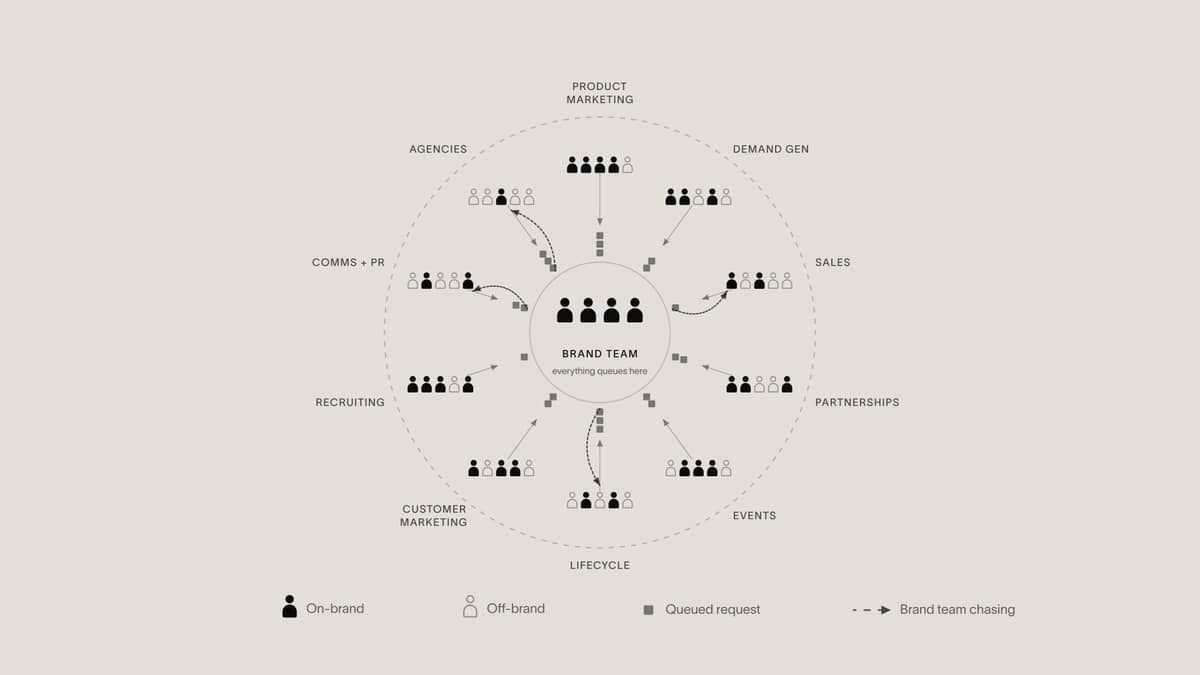
In his essay Why settle for noise when you can make music?, Paul Jun asks a question every brand and creative leader should sit with: will AI finally free in-house creative teams from being a service desk, or will it simply flood them with more of it?
Jun, a brand leader who lived the 375-request Slack queue at a fast-growing fintech, calls the better path "brand as software." His framing: most companies will use AI to clear a faster queue. The real opportunity is to turn a company's point of view into a living system, then give its best creative people time to make the work no system can predict.
He closes with a line we haven't stopped thinking about: most companies will use AI to make more noise. A few will learn how to make music.
That is almost word-for-word the thesis behind Decky.
The queue is the symptom, not the problem
The essay describes what happens when talented designers spend their days reproducing decisions the team already made: polishing slide 47, resizing assets, fixing decks other people broke. When the queue grows too long, rational people route around it. They open a blank deck, prompt a generic AI, and ship something that looks like it came from a different company.
A guideline can describe the brand. It cannot participate in the work.
That sentence is the whole argument in miniature. Brand guidelines were built for an era when production was scarce and trained specialists did the making. Software lowered the barrier to production without distributing judgment or taste. AI lowers it again. The result is the AI fingerprint we call out on our homepage: predictable layouts, default typography, stock visual #812. Noise.
Consistency says "we always look like this." Coherence says "we evolve, and you still know it is us."
The essay's best section argues a brand system should behave like jazz. A living brand needs coherence, a recognizable center with enough freedom at the edges to respond to the moment. A financial report should not have the same energy as an event.
We agree, and it is why Decky is not a template folder. Templates say "we always look like this." Decky learns from your best decks, your templates, your brand assets, and your standards, so every generated presentation starts from your recognizable center and adapts to the moment: a QBR, a board meeting, a sales pitch, a product launch. Same band, different songs.
The proof the writer cites is the right test: a designer saw one of their launch images on LinkedIn and recognized the company before realizing the logo was not even present. Recognition came from the relationships among type, color, composition, and voice. That is exactly what Decky encodes, and exactly what generic AI generators cannot fake, because they have never seen your brand.
Taste remains human. Repetition becomes software.
The essay's sharpest line for creative teams: taste remains human, repetition becomes software.
The practical version of that promise, from his own team's four-week overhaul, mirrors what we ship:
- Repeatable production becomes infrastructure. Slide decks, one-pagers, and whitepapers stop requiring a designer for every pass. In Decky, anyone can generate a presentation that already feels like your company, in minutes, inside the tools they already use.
- Judgment compounds. When the brand team makes a great decision, it gets codified into the system instead of dying inside the project that produced it. The next deck starts from a higher floor.
- The boundary matters. Brand-defining work, a new identity, a campaign platform, stays with the people with the deepest judgment. Decky is honest about where it is reliable and keeps humans in the loop where review matters.
His other warning is one we take seriously: a seventy-percent result can be worse than no tool when the remaining thirty percent forces someone to rebuild the whole thing under a deadline. It is why Decky outputs are real, editable Google Slides and PowerPoint files, not screenshots or HTML approximations you have to rebuild.
What this means for your team
If the essay resonated with you, the next step is not a bigger prompt library or a stricter PDF. It is turning your brand into a living system that participates in the work:
- Encode the decisions, not just the rules. Your best decks already contain your typography, layout, and narrative judgment. Decky learns from them directly.
- Give everyone the same instrument. Sales, marketing, CS, and leadership all generate from the same brand system, so a partnership email and a board deck feel like one company with one point of view.
- Keep the score, free the musicians. Let the system carry the known work. Your designers get their time back for the idea, the feeling, the launch worth noticing.
Most companies will use AI to make more noise. If you'd rather make music, book a demo or start free.
Read Paul Jun's original essay, Why settle for noise when you can make music?.
FAQ
What is "brand as software"?
Brand as software means turning a company's brand, its point of view, values, design decisions, and constraints, into a living system that participates in the work, rather than a static guideline document. Instead of describing the brand in a PDF, the system applies the brand when anyone in the company creates a deck, page, or asset.
Why do generic AI presentation tools produce "noise"?
Generic AI tools generate from patterns averaged across the internet, not from your brand. They have never seen your templates, typography, or standards, so every output shares the same fingerprint: predictable layouts, default fonts, and stock visuals. Volume goes up, recognition goes down.
How is Decky different from a template library?
Templates freeze one expression of the brand. Decky learns from your best decks and brand assets so generated presentations keep your recognizable center while adapting to the moment, whether that's a QBR, a board update, or a sales pitch. Judgment is codified and compounds; repetition is automated.
Does automating decks replace brand designers?
No. It frees them. When repeatable production becomes infrastructure, designers stop polishing slide 47 and spend their time on brand-defining work: the identity, the campaign, the idea no system could predict. Taste remains human; repetition becomes software.
Every deck on brand, in minutes.